6 min read
11 Subtle Signs Your Dog Has Social Anxiety
There's a difference between a dog who's shy and a dog who's anxious, and the wrong call can cost you months of progress. These 11 subtle signs separate normal reserved behavior from real social anxiety, plus what to do about each one.

Contents
Anxiety can affect our canine companions and just like in us humans, there are different types that they can suffer from. It isn’t a nice situation for them, and understandably, the emotion can feel overwhelming. When they’re feeling like that, we’d all love to be able to speak to them, to calm them down and reassure them.
Nevertheless, they do communicate with us through their body language and behavior. This way, we can still recognize, interpret and act on what they are telling us.
The earlier we can spot signs they are experiencing anxiety, the sooner we can remedy the situation, before it escalates. This also aids us in spotting what triggers their anxiety, so we know more about how we can help them, or what to avoid in future.
About Social Anxiety

Your dog will be socially anxious if they are fearful around other dogs and/or people, due to anticipating danger. They will usually be totally comfortable around you, and other people with whom they are familiar, such as family or friends who frequently visit and they’ve known since a young age.
Their normal environment, personal space and own resources (e.g. their bed) are safe spaces for them. Some dogs can become anxious if someone, or another dog, they are unfamiliar with, enters this space. This is particularly true, considering dogs can’t give consent to someone to do this. So this can heighten their anxious feelings.
Therefore, it’s super important for us to be able to identify and recognise the signs our dog is feeling anxious in a social situation.
So, what signs should we look out for? Each dog is different, and they will process their emotions in their own way. However, you know your dog better than anybody and will continually learn more about them throughout their life.
Below is a handy list of behaviors that you may see, but you may not see them all. Some are more subtle than others. But, this is because they are the signs they will show earlier on; as mentioned above, the sooner we can spot the signs, the better!
Avoidance Behavior

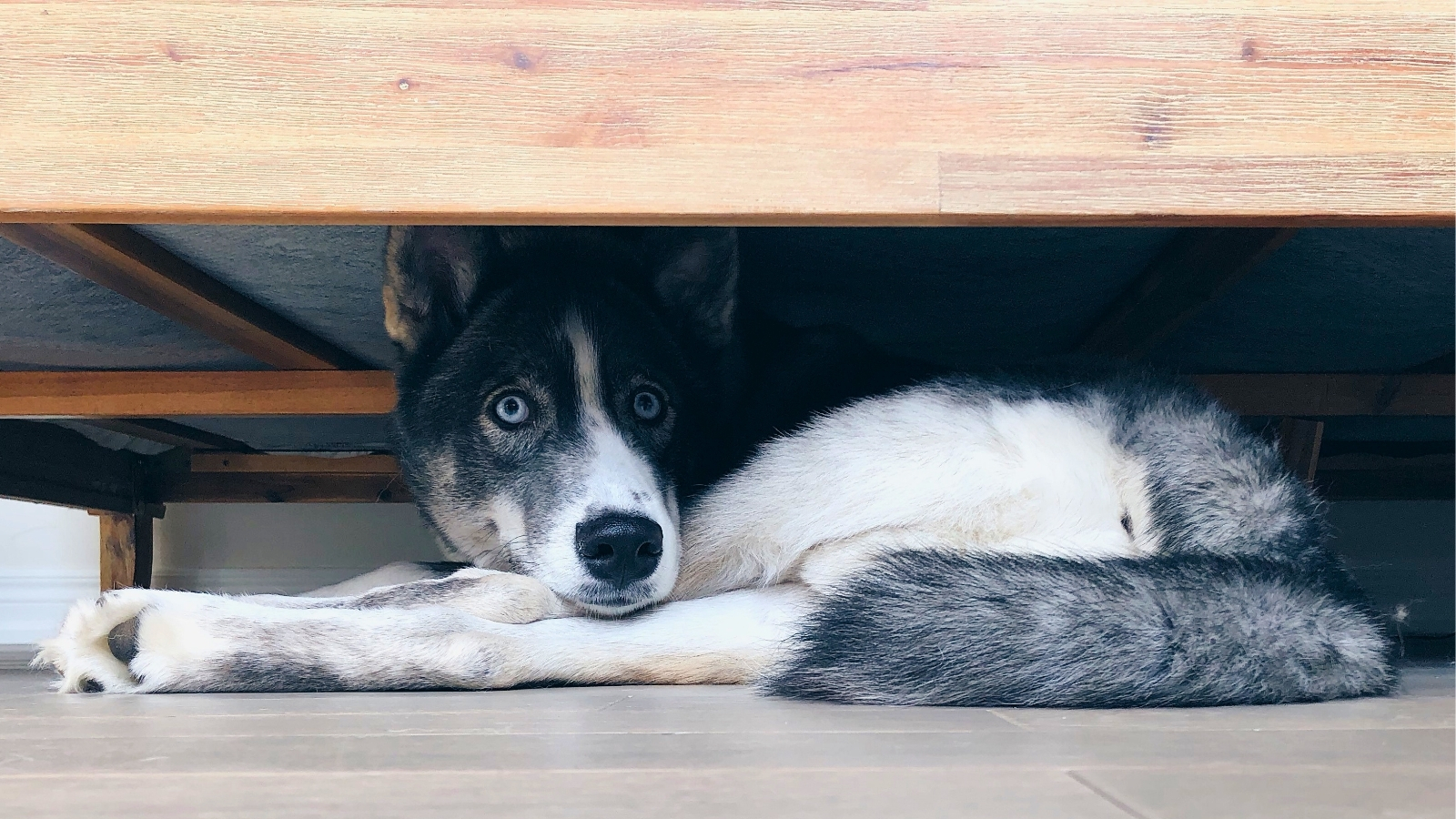
Your dog may try to avoid the social situation if they are feeling anxious. They may actively move away and/or hide behind you, or nearby objects. Another form of avoidance behavior could be them acting depressed, or ‘shutting down’, as a way to dissociate themselves from the situation.
Compulsive Behaviors

If your dog is feeling extremely anxious, they may engage in a compulsive behavior in an effort to calm themselves down. Such behaviors include overgrooming themselves or licking or chewing inanimate objects, scratching themselves and continually crying or barking.
Despite being an effort to self-soothe, these behaviors can have consequences. You may see skin infections from grooming too much, so it’s important we pick up on earlier signs to avoid this happening.
Excessively Boisterous

On the contrary to some other behaviors in this list, dogs can become excessively boisterous in times of stress. This can sometimes be to try and get your attention to distract you and remove them from the situation.
You may notice them seeming over-excited and over-friendly, such as jumping up, mouthing or licking you.
Showing Their Tummy

This one may come as a surprise, and rest assured they may still show you their tummy in times of playfulness or when they trust you. However, they may also show their tummy when they are feeling nervous in a particular situation. This is them being submissive. It is known as the ‘appeasement roll’.
This behavioral sign is best judged in this context in the presence of other signs that may suggest they’re feeling anxious. It is distinguishable from other situations when they roll over. You will notice that they maintain eye contact with the person they are worried about, hold their ears back, be tense in their body and legs and tuck their tails.
Their Head: Ears, Eyes, Mouth

A dog’s eyes, ears and mouth can tell a whole story as to how they are feeling. Some things you may notice if your dog is feeling anxious in a social setting include:
- Seeing the whites of their eyes
- Dilated pupils, narrow eyes and frequent blinking: This is a sign of hypervigilance, when they are trying to stay alert in times of anxiety
- Keeping their eyes on the perceived threat
- Furrowed brows
- Holding their ears back and close to their head
- Frequent, long yawns
- Lip-licking
- Drooling
- Flicking their tongue out
Smiling

Although this technically comes under mouth, it’s worth elaborating on this one. You may have seen videos where dogs are ‘smiling.” As cute as it may seem, this is actually a dog trying to diffuse social conflict and communicate its anxiety with us.
It is known as the ‘appeasement grin.’ It is distinguishable by your dog exposing their teeth in a ‘smile’ shape, squinting or shutting their eyes and holding their ears back.
Body Posture

A dog’s body language can speak a thousand words, a bit like our own! When a dog is unsure of something, or someone, and begins feeling anxious, they will start to slow down and become more tense in their body and face.
As the feeling escalates, they may begin tucking their tail between their legs, shifting their weight backwards to crouch, lower their body or lean away from a perceived threat. This makes them look small and insignificant to a perceived threat.
If you are approaching a social situation with your dog, if they suddenly stop and lift one of their front paws up, this can be indicative that they are anxious to enter the situation
Shaking

If your dog does a full-body shake, this can be them quite literally ‘shaking it off’, following being in a challenging social situation.
Anxious dogs may also tremble or shiver.
Trying To Get Your Attention

This links to excessively boisterous behaviors you may see, but there are some other behaviors you may see and consider odd for your dog; all in their quest to get your attention to remove them from the situation.
Such behaviors include not following well-known requests, such as ‘sit’ as they are struggling to concentrate and grabbing a treat quickly and unexpectedly or refusing treats altogether.
Pacing

Your dog may start pacing or making wide circling movements, because they are unable to settle. When faced with an anxiety-inducing situation, the perceived threat will trigger their autonomic nervous system.
This is more commonly known as the ‘fight or flight’ response, but there are now two more ‘f’s, which are ‘fidget’ and ‘freeze’, so depending on your dogs personality traits, will depend on how they respond. Regardless, a dogs body will make changes to allow them to react appropriately at any given time to the situation they are in.
Defensive Aggressive Behaviors

Dogs will not display aggressive behaviors without reason. This will be a last resort for them, if earlier signs have not been noticed or have been ignored. At this point, they will be feeling frightened and threatened.
Defensive aggressive behaviors may include baring their teeth, ‘air-snap’, growling or biting, so it is in everyone’s best interest to avoid this happening!
There are different ways you can help if your dog has social anxiety. If you spot them feeling anxious in a situation, at that time, it is best to remove them from it. They should also have a safe, quiet, calm space they relax in. Specifically in the home environment, so they can retreat to this is a new person enters, so anxiety-inducing interactions are avoided. If they do retreat, give them their space.
A dog’s ‘socialisation period’ – the prime time to accustom them to the wonders of the world’ is early in life, around 5-16 weeks of age. At this stage, it is recommended to introduce your puppy to lots of different people, so they are less anxious and fearful later in life. However, incidents can occur and with rescue dogs, their history is not always known.
Gentle and gradual exposure to the situation is ideal, with positive reinforcement, but you may wish to consult a behaviorist to help you ensure the process of helping them is as smooth and safe as possible. Your vet can refer you, and rule out any medical causes at the time.
Make us part of your pack when you search.
Add Caninely as a preferred source on Google and we'll be right there next time you go searching. Five seconds, and you get straight dog talk instead of the usual fluff.


9 Health Changes in Dogs Pet Parents Brush Off Too Easily
Dogs are pros at hiding when something's off, and a lot of the early signs are easy to chalk up to age or quirks. Most aren't emergencies. But they're the kind of changes worth catching early, before they turn into something bigger and harder to treat.