4 min read
9 Reasons Your Dog Snores Like a Freight Train
If your dog's snoring sounds more like a chainsaw than a cute little snuffle, you're not imagining things, and you're definitely not alone. Some snoring is harmless and breed-related, but other times it's your dog's body waving a red flag. Here are 9 reasons your dog might be snoring uncontrollably, plus how to tell when it's time to pay closer attention.
Vet Approved

This information is current and up-to-date in accordance with the latest veterinarian research. Learn more
Contents
Has your dog suddenly started snoring? Are they keeping you up with their nighttime noise? While some owners may think this is cute, it could actually be a sign of an underlying health issue. Normal, healthy dogs should have mostly quiet breathing when they are asleep, snoring is not typical.
You should always get your pet examined by your vet if you have concerns. In the meantime, familiarise yourself with the top 9 reasons why your dog might be snoring uncontrollably as this may help your discussion with the vet.
Brachycephalic Breeds

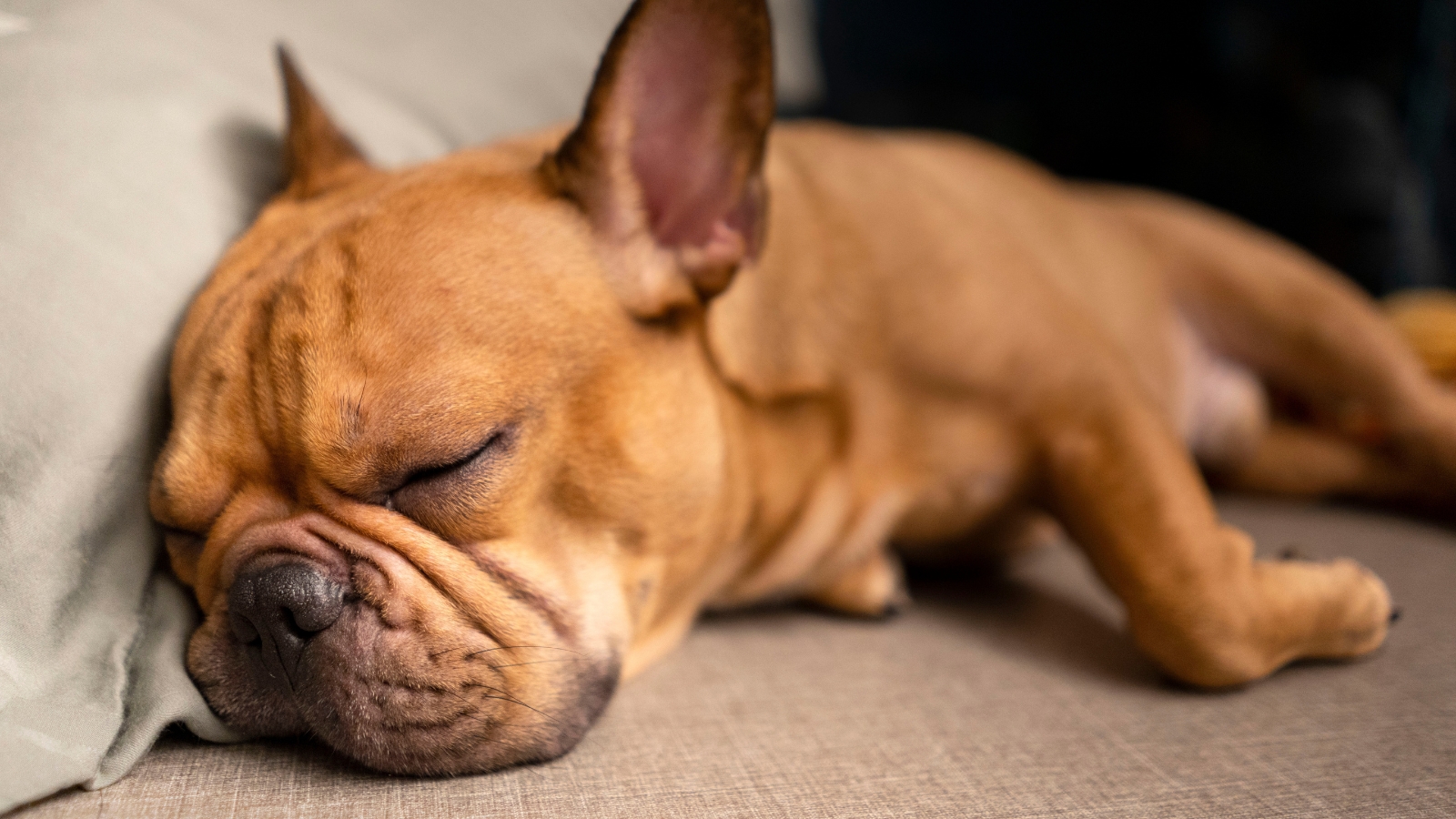
If your dog is a brachycephalic breed (flat-faced) then they will be far more likely to snore than other longer-nosed dogs. Brachycephalics have compromised airways, with a narrow trachea (windpipe) and nostrils.
But they are also trying to fit all the same soft tissue in the back of their throat as other dogs. Their broad and short skulls mean that their soft palate is more likely to vibrate and partially obstruct their airway while they are sleeping.
If your dog consistently snores and has other signs of brachycephalic obstructive airway disorder (BOAS) such as difficulty exercising, constant panting, or episodes of collapse, then you must seek veterinary advice. While they might always have snored from a young age, this is not normal behavior, and your pet may require surgery to improve their quality of life.
Allergies

Allergies can cause some dogs to snore excessively. Dogs can be allergic to grass pollens, tree pollens, and house dust mites, amongst other things. This can lead to rhinitis and sinusitis (inflammation of the lining of the nasal passages and sinuses) contributing to symptoms like sneezing, nasal discharge, watery eyes, and snoring.
Affected animals may show symptoms seasonally, or all year round depending on what they are allergic to. Other environmental contaminants could also aggravate the airways including cigarette smoke, road traffic pollution, and air fresheners or diffusers.
Infectious Disease

Another cause of rhinitis and sinusitis is infectious disease. Just like people with a cold, a dog with an upper respiratory tract infection is more likely to snore. The most common examples of diseases causing infectious rhinitis include canine distemper, canine adenovirus types 1 and 2, and canine parainfluenza. These viruses then allow for secondary bacterial infection to occur, further worsening the symptoms.
Fungal infections can also occur in the nasal passages and sinuses, which can be very painful. Aspergillosis is an example of this, which needs to be treated by flushing with anti-fungal products under general anesthetic.
Affected dogs will typically have nasal discharge, sneezing, appetite changes, increased discharge from the eyes, and more labored breathing. Most will benefit from anti-inflammatories to help ease their symptoms, with antibiotics or anti-fungal medication as appropriate.
Nasal Obstruction

If there is a physical obstruction in your dog’s nasal passage this can change the way air flows, leading to snoring. Associated inflammation and secondary bacterial infection may also contribute to this.
A foreign body in the nasal passage could be a cause, with plant material being perhaps the most common culprit e.g. grass seeds or blades of grass. A dog with a foreign body may paw at their face or show retching/gagging behavior.
Another cause of obstruction in the nasal passage is a growth. This could be a benign polyp-type lesion or a malignant tumor. To diagnose an obstruction, diagnostic imaging could be required, for example, rhinoscopy ( a small rigid camera inserted into the nasal passage).
Occasionally tooth root abscesses can affect the nasal passages, with localized inflammation causing changes in airflow. Affected dogs may have facial swelling and signs of dental disease, such as gum inflammation, heavy tartar build-up, or a fractured tooth.
Sleep Apnea

Sleep apnea is something we are familiar with in people, but can it affect dogs? The answer is yes, but it is uncommon. Sleep apnea is characterized by a change in breathing during sleep. Classically affected dogs will stop breathing multiple times during the night.
This will be immediately followed by a loud gasp or sigh before their normal breathing starts up again. This makes for a pretty restless night. Dogs with sleep apnoea can be more tired than other animals and spend more time napping during the day.
Snoring can be a sign of sleep apnoea, but the two aren’t always seen together. Sleep apnoea is more likely to occur in overweight dogs, brachycephalic breeds, or animals struggling with allergies.
Sleeping Position

Dogs that sleep in a funny position are more likely to snore than those that sleep sensibly! A dog that rests its head over the edge of the bed can put excessive pressure on the airways in their throat leading to snoring. Similarly, a dog that sleeps upside down or at a funny angle may change the normal smooth airflow through their upper respiratory tract.
This is unlikely to cause your pet any harm, as a healthy pet will change its position if things become uncomfortable. Just make sure that they have a comfortable and large enough bed to relax on.
Obesity

Dogs that are overweight will be much more likely to snore than a dog at a healthy weight. Just as with people, excess fat around the neck and chest will put undue pressure on the airways. This will lead to more vibrations as the air is forced through constricted passages.
One way of telling if your pet is overweight is to assess their body condition score. If you are unsure how to do this then speak to your vet for advice. Your vet will also be able to help you work on a sensible weight loss regime for your pet.
Not only will weight loss improve their snoring, but it will have multiple other health benefits too. These include decreased risk of diabetes, cancer, and heart disease, but also an improvement in mobility and joint issues like osteoarthritis.
Medications

Some medications could lead to snoring in dogs. Sedatives or muscle relaxants will cause widespread relaxation in the body, including in your pet’s airways. This is most commonly seen in a hospital setting when your pet is undergoing an anesthetic but may be seen with certain drugs used at home too, for example in pets that have noise phobias.
Speak with your vet if you suspect your dog is having a side effect of their medication. It could be normal, but it is always best to check especially if your dog is showing any other symptoms, you are not happy with.
Age

Some dogs will start snoring more as they age. This can be due to reduced muscle tone, as well as weight gain. However, elderly animals are also more at risk of tumors and tooth root abscesses, so this may need to be ruled out as an underlying cause, especially if your dog has other symptoms like nasal discharge, facial swelling, or changes in appetite.
Make us part of your pack when you search.
Add Caninely as a preferred source on Google and we'll be right there next time you go searching. Five seconds, and you get straight dog talk instead of the usual fluff.


11 Subtle Signs of Discomfort Every Dog Parent Should Know
Dogs can’t tell us when something’s wrong, but they do give us clues. From subtle behavior shifts to changes in appetite or energy, here are 11 signs your dog might need a little extra care.