5 min read
Great Dane: Breed Characteristics, Care, and Photos
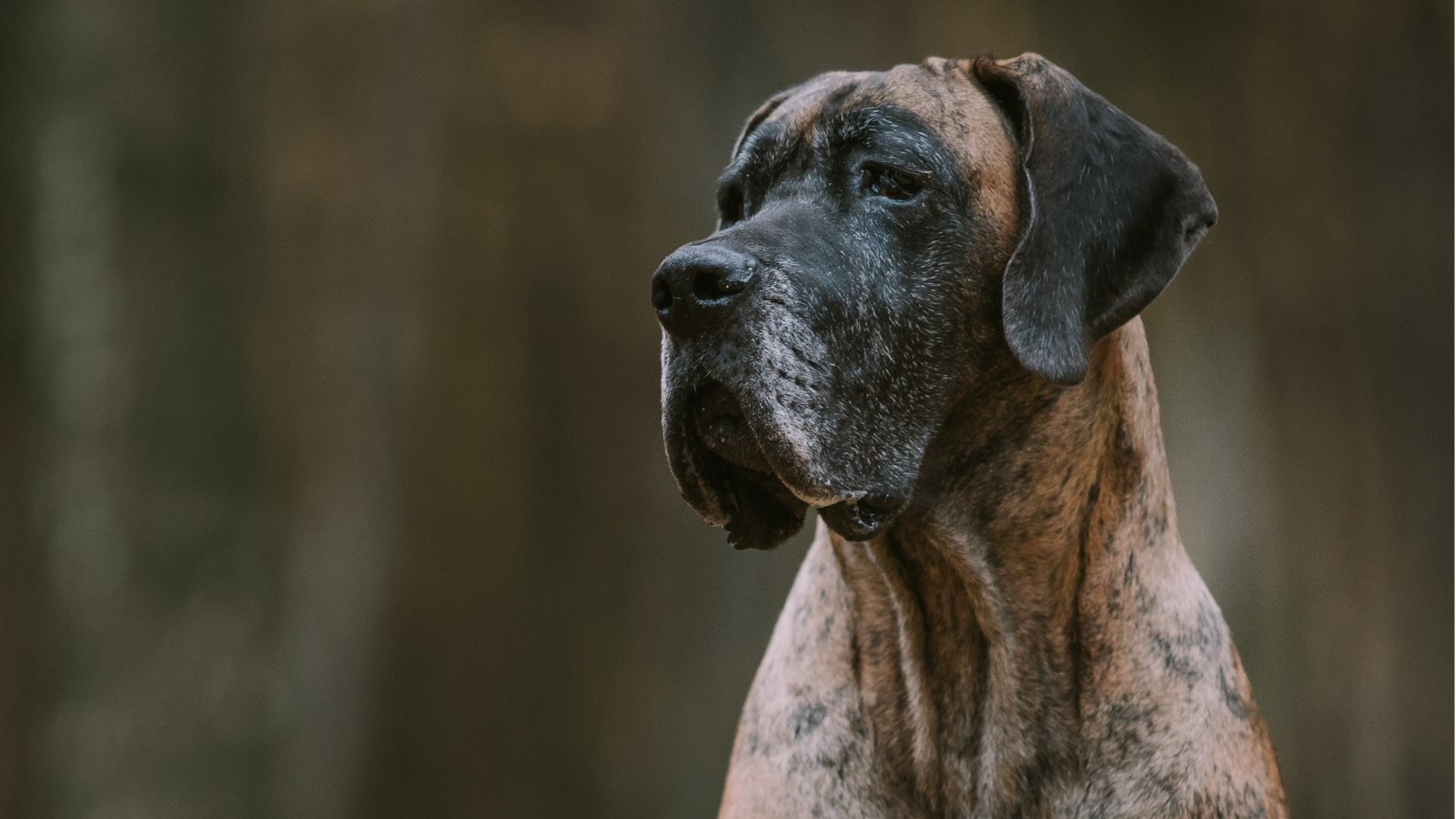
Great Danes are sweeter, lazier, and more apartment-friendly than their size suggests. They're also one of the shortest-lived breeds in the AKC, with most barely making it past ten. Here's what owning one really looks like, from the vet bills to the grocery bills.

Contents
Great Danes are the rare breed where the marketing actually undersells the dog. People hear “giant breed” and brace themselves for a 150-pound chaos engine.
What they get is a melancholy elegant houseguest who would prefer to nap on your couch, lean against your hip when you stand at the kitchen counter, and pretend the floor is lava if you ask him to go outside in the rain.
The catch is the part nobody wants to talk about: the lifespan. The AKC ranks Great Danes #21 in popularity for 2025, and a 2024 study in Nature put them near the bottom of all breeds for longevity. Eight to ten years is the average. Six or seven isn’t unusual.
You’re signing up for one of the best dogs you’ll ever own, and you’re signing up to lose them too soon. That trade-off is the whole conversation about this breed.
Breed Overview
Breed Pros and Cons
Pros
- Gentle temperament
- Good with small spaces
- Short, easy-care coat
- Mature into mellow
- Presence deters intruders
- Exceptional with children
Cons
- Short lifespan
- Serious bloat risk
- Expensive everything
- Drool, gas, and slobber
- Puppies are clumsy
- Can knock over kids
Physical Appearance
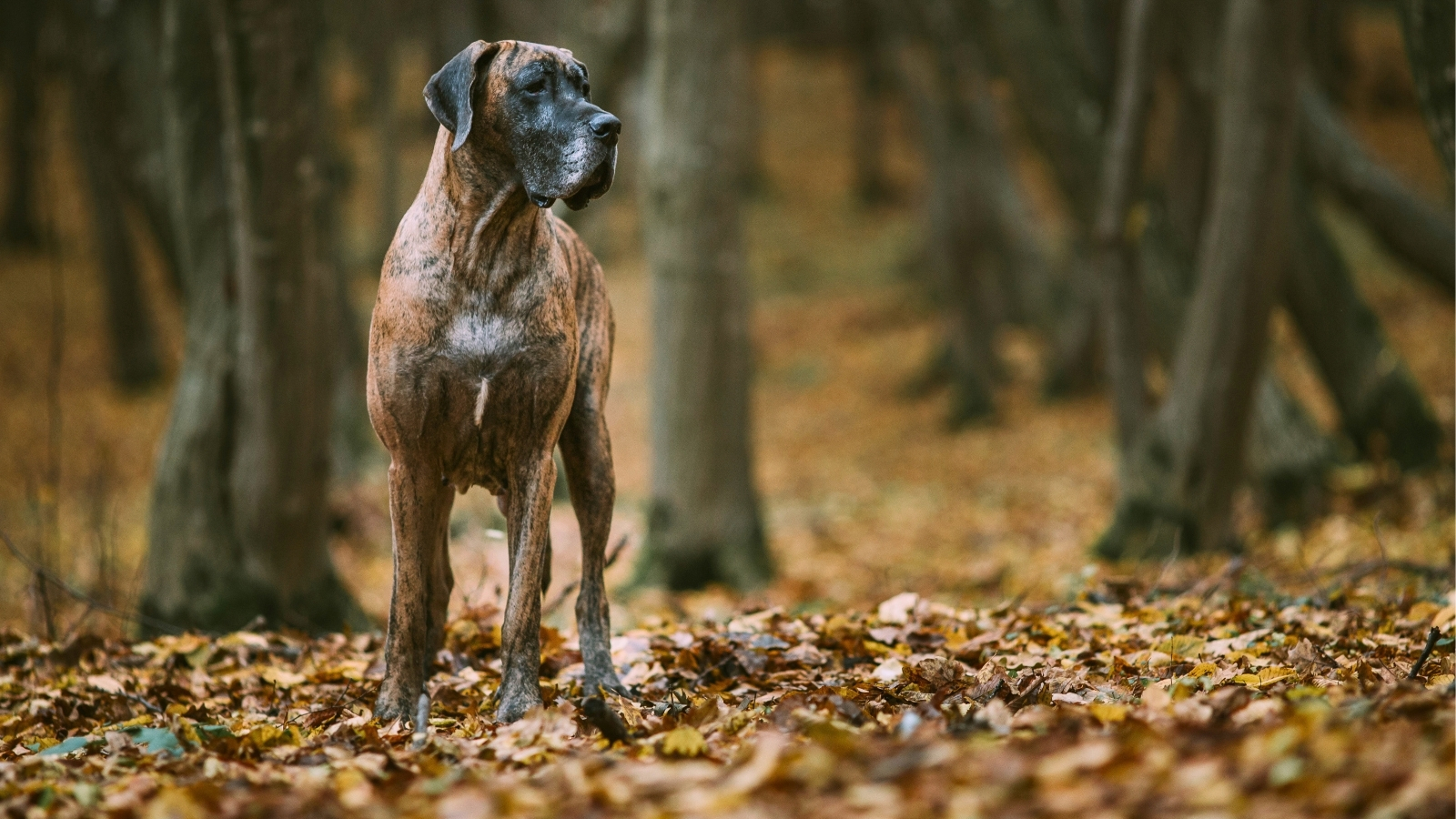
Great Danes are not the heaviest breed in the world, but they’re often the tallest. Males stand 30 to 32 inches at the shoulder and weigh 140 to 175 pounds. Females are 28 to 30 inches and 110 to 140. On their hind legs, a male Dane can easily look you in the eye if you’re under six feet tall. Zeus, a Dane from Texas who held the Guinness record as the world’s tallest dog, measured 7 feet from feet to nose when standing upright.
The build is what sets them apart from other giant breeds. Where a Mastiff is thick and stout, the Dane is lean, long-legged, and surprisingly elegant. The breed standard calls for a square, well-balanced silhouette with a deep chest and a long, refined head.
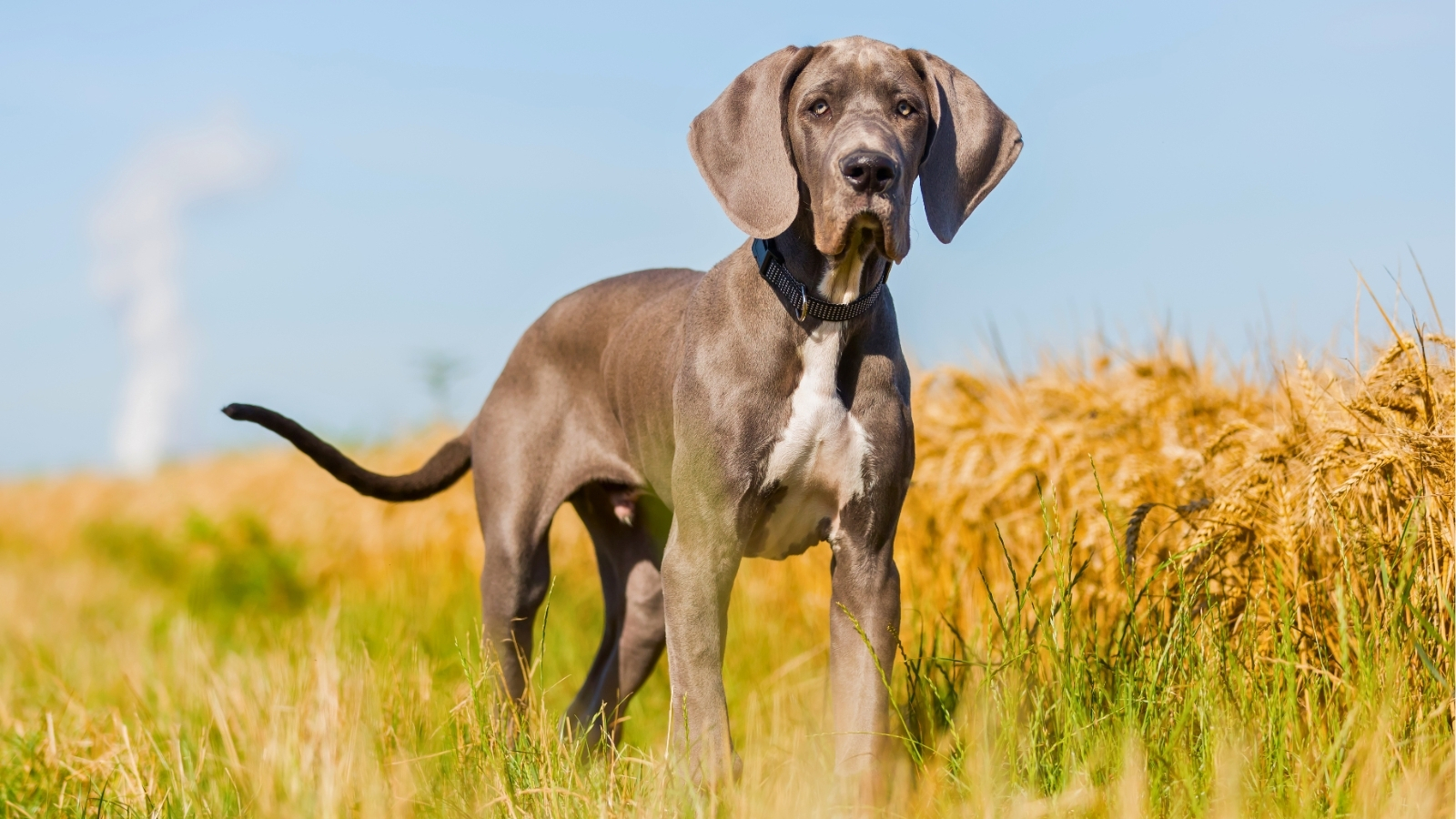
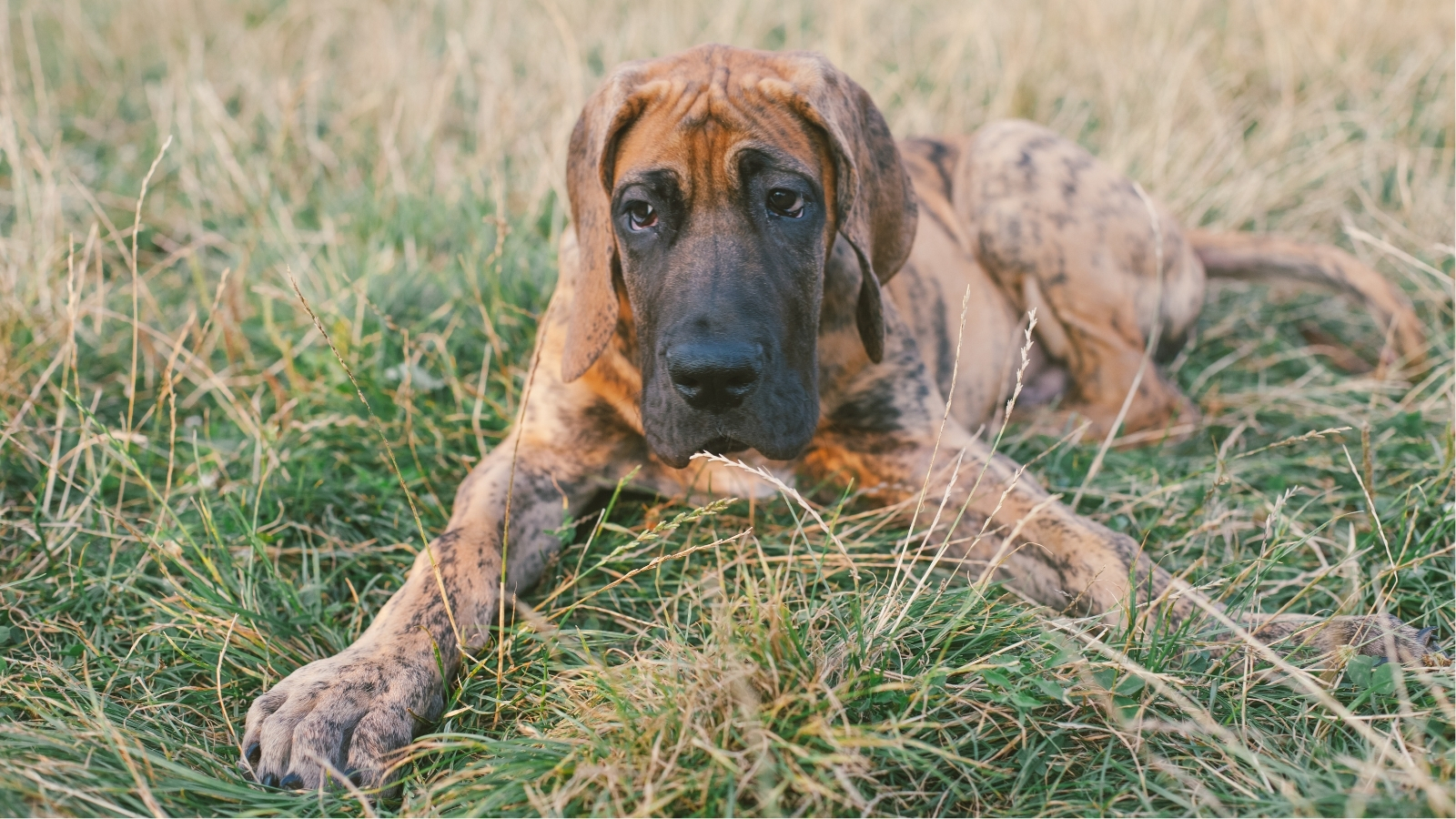
Coats are short and smooth, in seven recognized colors: fawn, brindle, blue, black, harlequin, mantle, and merle. Harlequin (white with random black patches) is the most distinctive and the hardest to breed correctly. Fawn with a black mask is what most people picture when they hear “Great Dane.”
The face is the giveaway. Soft, almost mournful eyes, long muzzle, and ears that are either left natural (folded down like a hound’s) or cropped to stand upright. Cropping is a cosmetic choice that’s banned in most of Europe and increasingly out of favor in the US. Most modern Dane owners leave the ears natural. They’re cuter that way anyway.
Behavior & Temperament
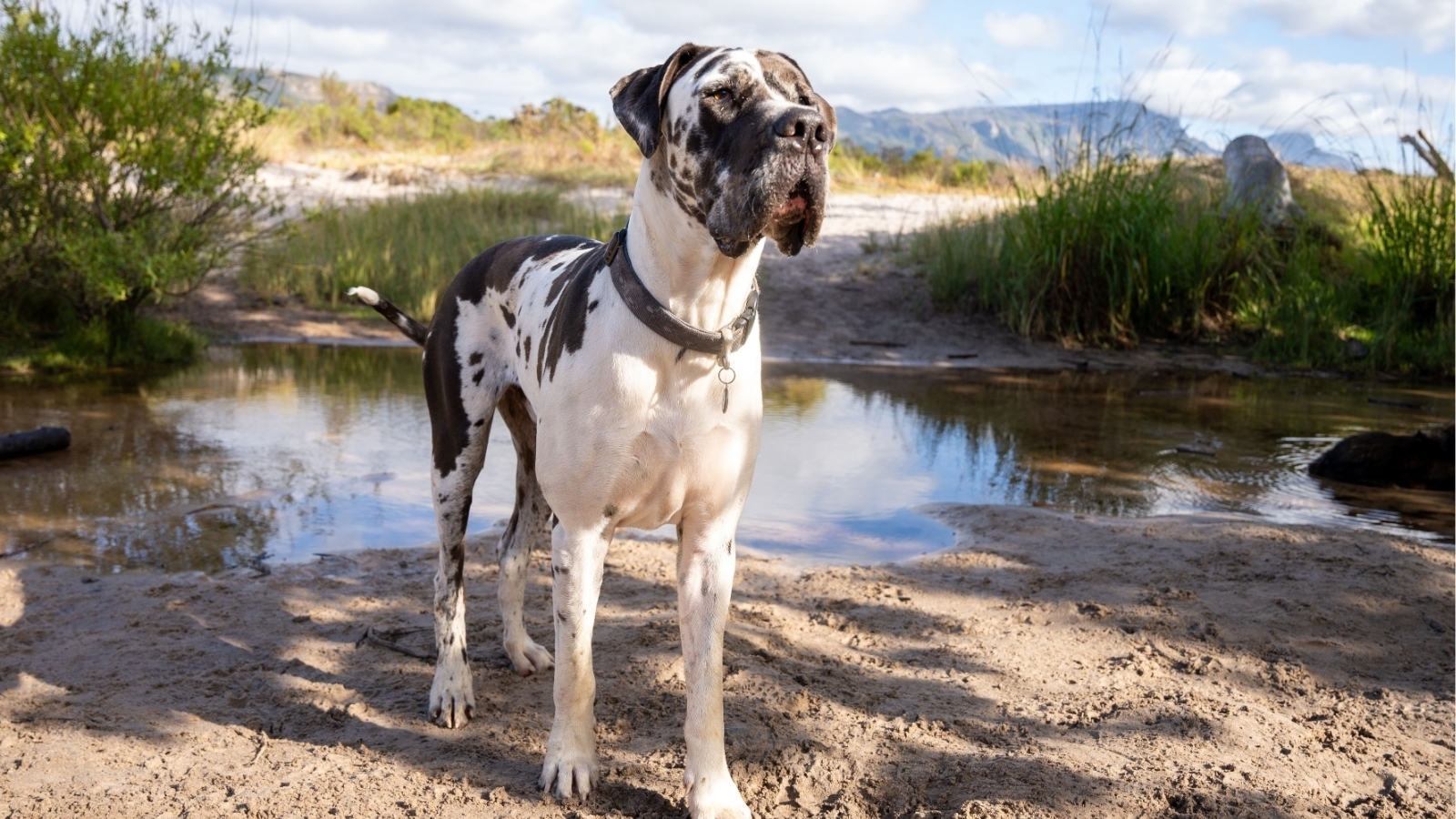
The phrase “gentle giant” gets thrown around for half the working group, but Great Danes earn it more honestly than most. They were bred down from aggressive boar hunters into companion guardians for German nobility, and the temperament that came out the other side is genuinely sweet, somewhat sensitive, and oriented entirely around their people. Danes don’t do well in kennels or backyards. They want to be inside, on the furniture, ideally in physical contact with at least one human at all times.
They’re also surprisingly low-energy for their size. A mature Dane is a couch potato by trade. Adults are content with 30 to 60 minutes of moderate exercise daily, ideally split into two walks. What they cannot do is high-impact activity, especially as puppies.
Jumping, hard running, and stairs before two years old can permanently wreck the joints they’re already predisposed to having problems with. Slow growth, soft surfaces, and patience are the recipe.
The behavioral catch with Danes is the size-meets-puppy-brain problem. They don’t reach mental adulthood until 18 to 24 months, sometimes longer, and they don’t realize how big they are until you teach them.
A 130-pound adolescent who wants to greet a guest by jumping up will hospitalize someone. Training has to start at eight weeks, focus on impulse control, and stay consistent through the goofy two-year window. Force-based training fails badly with Danes. They shut down. Positive reinforcement and clear boundaries work fine.
Ideal Home Life
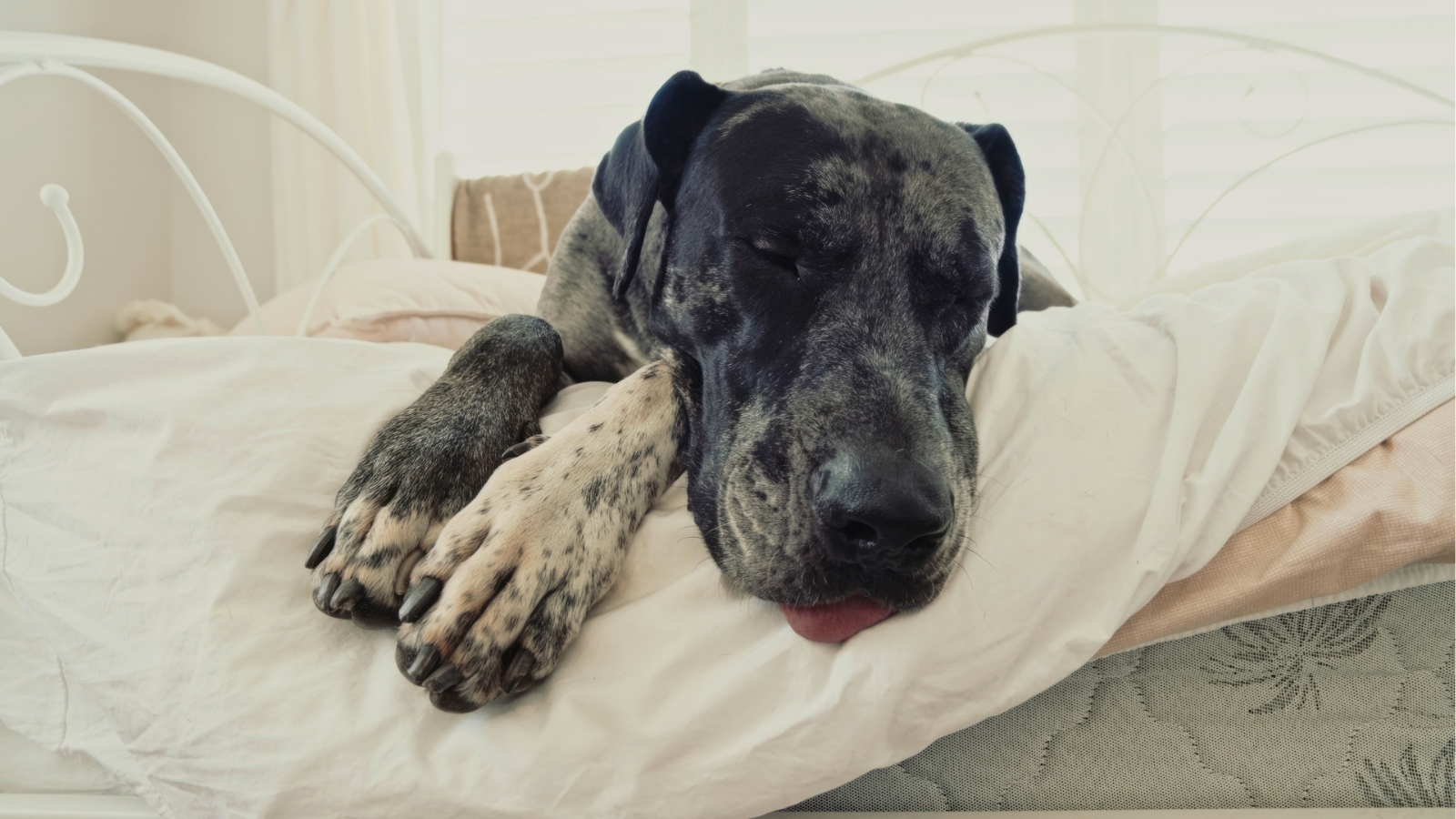
Great Danes do shockingly well in apartments, which surprises everyone. The reasoning is simple: they’re sedentary indoors, they don’t need a sprawling yard to burn off energy, and they’d rather sleep on a couch than patrol a perimeter.
What they do need is enough floor space to actually exist. A studio is too tight. A one-bedroom with a real living room is workable if you’re committed to twice-daily walks.
Where Danes don’t do well is in homes with a lot of stairs, slippery floors, or families that travel constantly. The stair issue is real and underrated. Going up and down stairs all day grinds on developing joints and accelerates the arthritis that almost every Dane will eventually face. If you live in a multi-story house, plan to keep the puppy on one floor until at least 18 months, and consider runners on hardwood. Slipping injuries are no joke at this size.
Families with kids are usually a great fit because the temperament is so reliably gentle. The caution is the same as with any giant breed: a Dane wagging his tail at toddler-eye-level is a black eye waiting to happen, and a 150-pound dog who decides to sit on a four-year-old creates a real problem.
Supervision matters. So does teaching the dog that humans are not furniture. The breed is also genuinely sensitive to household tension. Yelling, fighting, or chaos stresses them out fast. They’re emotional barometers in a way smaller breeds aren’t.
Health Risks
Bloat / Gastric Dilatation-Volvulus (GDV)
This is the headline killer for the breed. The deep-chested Great Dane has the highest bloat risk of any dog. The stomach fills with gas and twists on itself, cutting off blood flow, and without emergency surgery within a few hours, it’s fatal. Most experienced Dane owners and giant-breed vets recommend a preventative gastropexy at the time of spay or neuter, where the stomach is tacked to the abdominal wall so it physically can’t twist.
Dilated Cardiomyopathy (DCM)
Dane hearts are big. Sometimes too big. Dilated cardiomyopathy enlarges the heart muscle, weakens its ability to pump, and is one of the leading causes of death in the breed. Symptoms include exercise intolerance, coughing, fainting, and sudden lethargy. Annual cardiac checks starting at age three are smart. Caught early, it’s manageable with medication for years. Caught late, it’s not.
Hip and Elbow Dysplasia
Giant breeds carry massive weight on joints that develop slowly, and Great Danes are no exception. Both hip and elbow dysplasia are common, leading to chronic pain and arthritis. Reputable breeders screen with OFA or PennHIP X-rays before breeding, and getting ahead of hip issues early with weight management, joint supplements, and controlled exercise can make a years-long difference in quality of life. If your breeder skips hip clearances, walk away.
Wobbler Syndrome
Cervical spondylomyelopathy, commonly called wobbler syndrome, is a condition where the cervical vertebrae compress the spinal cord, causing a wobbly, uncoordinated gait, especially in the hind legs. Great Danes are one of the most affected breeds. Mild cases can be managed with rest, anti-inflammatories, and a neck-friendly harness. Severe cases require surgery. It often shows up in adolescence or young adulthood.
Osteosarcoma (Bone Cancer)
Bone cancer hits giant breeds at dramatically higher rates than smaller dogs, and Great Danes are squarely in the high-risk group. It usually presents as a sudden limp or visible swelling on a leg, and it progresses fast. Amputation plus chemotherapy is the standard treatment and can extend life by a year or two, but the prognosis is generally not good. It’s one of the leading causes of death in the breed alongside cardiomyopathy and bloat.
Hypothyroidism
Autoimmune thyroiditis is common in Danes, leading to weight gain, lethargy, hair loss, and skin issues. The good news is it’s one of the easiest conditions to manage in veterinary medicine. A daily thyroid pill, regular bloodwork, and your dog returns to baseline. A simple blood panel catches it. It typically appears in middle age.
Heart Valve Disease
Beyond DCM, Danes are prone to mitral and tricuspid valve issues that cause heart murmurs and eventually congestive heart failure. Regular cardiac exams matter, especially as your Dane enters senior years (which, depressingly, starts around age six). Early-stage valve disease is often asymptomatic but treatable.
Ectropion and Entropion
The loose facial skin around a Dane’s eyes can roll inward (entropion) or droop outward (ectropion), both causing chronic eye irritation and infection. Mild cases can be managed with eye lubricants. Severe cases need surgical correction. Worth checking your puppy’s eye conformation early.
Projected Cost of Ownership
Great Danes are expensive in ways first-time giant-breed owners consistently underestimate. The food bill is significant. Medications dose by weight, so heartworm prevention, flea and tick treatment, and antibiotics all cost more than they would for a 50-pound dog. Boarding charges by weight class. And the surgical bills, when they come, come big.
The most important cost decision you’ll make is whether to do a preventative gastropexy. The procedure runs $500 to $1,500. Emergency bloat surgery runs $5,000 to $10,000 and has a meaningful chance of failing. The math isn’t subtle.
The numbers below assume a healthy adult Dane with no major medical events. Joint support becomes essentially mandatory by age four or five for most Danes, and pet insurance is one of the few breeds where the math almost always favors having it.
| Expense | Initial | Monthly | Annual |
|---|---|---|---|
| Purchase | $1,500-$3,000+ | — | — |
| Supplies | $400-$800 | — | — |
| Food | — | $110-$180 | $1,320-$2,160 |
| Veterinary (incl. gastropexy) | $1,200-$2,500 | — | $500-$1,200 |
| Training | $200-$600 | — | Varies |
| Grooming | $50-$100 | — | $60-$100/session |
| Insurance | — | $80-$160 | $960-$1,920 |
| Boarding | — | Varies | $55-$95/day |
| Replacements | — | — | $200-$500 |
| TOTALS | $3,350-$7,000 | $190-$340 | $3,040-$5,780+ |
The food line is real. Adult Danes eat 6 to 10 cups of high-quality large-breed kibble per day. A 30-pound bag lasts about two weeks. Cheap food is a no-go with this breed because rapid puppy growth on the wrong nutrition is a direct line to lifelong joint problems. Stick with formulas specifically designed for large or giant-breed puppies until at least 18 months. Your vet will thank you. So will your dog.
Pet insurance with this breed is closer to required than optional. A single bloat episode, cancer treatment, or cardiac workup will run $5,000 to $15,000. Premiums are high because Danes are expensive to insure, but they’re a fraction of writing one of those checks at the emergency vet. Get the policy at puppy intake. Pre-existing condition exclusions catch a lot of Dane owners off guard.
History and Breed Origins
The Great Dane is German, not Danish. The name is one of the great misnomers in the dog world. The breed was developed in Germany in the 16th century from a cross of English Mastiffs and Irish Wolfhounds, originally bred to hunt European wild boar. Boar hunting required a dog with the size and aggression to bring down a 400-pound animal armed with tusks, which is the kind of work that selects hard for power and gameness.
The transformation came when firearms made boar hunting obsolete and German nobility started using the breed as estate guardians and ceremonial companions. Breeders selected hard for temperament. The aggressive edge got bred down, the size and presence stayed, and by the late 1800s the modern Great Dane began to take shape.
Germany declared the breed the Deutsche Dogge (German Mastiff) and named it the national dog in 1876. Why English speakers ended up calling it the Great Dane is a historical accident: French naturalist Buffon traveled through Denmark in the 1700s, encountered a similar breed there, and labeled them “le Grand Danois.” The English-speaking world ran with it, and the German breeders never got the name back.
The breed arrived in the United States in the late 1800s. The AKC recognized it in 1887, and the Great Dane Club of America was founded in Chicago in 1899. Danes have stayed in the top 25 most popular breeds in the US for decades, currently sitting at #21 for 2025. Cultural impact is hard to overstate. Marmaduke, Scooby-Doo, and the Sandlot’s Beast are all Great Danes. The breed is shorthand for “lovable big dog” in a way few others are.
Frequently Asked Questions
How long do they live?
The average lifespan is 8 to 10 years. Some Danes only make it to 6 or 7. Twelve is considered ancient for the breed. A 2024 Nature study placed Great Danes among the shortest-lived purebreds tracked. Lifespan is the single most painful trade-off in owning this breed, and there’s no way to soften it. Strong genetics, weight management, preventative gastropexy, and good cardiac care can push you toward the upper end.
Are they good for apartment living?
Yes, surprisingly. They’re sedentary indoors, don’t need a yard to run laps in, and would rather nap than patrol. The catch is they need enough floor space to physically exist, plus committed twice-daily walks. A one-bedroom with a real living room works. A studio doesn’t. Avoid third-floor walk-ups. The stairs will catch up with the joints.
How much do they eat?
Adult Danes eat 6 to 10 cups of high-quality large-breed kibble per day, split into two or three meals. Never one big meal. Multiple small meals reduce bloat risk. A 30-pound bag of premium food lasts about two weeks. Plan to spend $1,300 to $2,200 a year on food alone, more if you go fresh or raw.
Do they drool a lot?
Less than a Mastiff or a Saint Bernard, but yes. The loose flews around their mouths produce drool, especially after eating, drinking, or seeing food. It’s not the wall-flinging slobber of some giant breeds, but you’ll find drool ropes on furniture and pant legs. A slobber rag in the kitchen is the standard solution.
Are they good for first-time dog owners?
Generally not. The temperament is forgiving, but the size, training requirements, health risks, costs, and lifespan grief make it a brutal first-dog experience. Danes are an outstanding second or third dog when you’ve already learned how to train, manage, and emotionally prepare for a major commitment. As a first dog, the learning curve plus the inevitable loss is more than most people expect.
Sources
Make us part of your pack when you search.
Add Caninely as a preferred source on Google and we'll be right there next time you go searching. Five seconds, and you get straight dog talk instead of the usual fluff.


Saint Bernard: Breed Characteristics, Care, and Photos
Saint Bernards are gentle giants with a clock that runs fast. Drool, dysplasia, heatstroke risk, and a heart of gold. Here's the honest version, from someone who actually owns one, and the unflattering parts most breed profiles skip.