4 min read
7 Telltale Signs Your Dog is Jealous of Another Dog
If your dog suddenly shoulders between you and another pup, hogs your lap, or side-eyes the new puppy across the room, you're not imagining it. Dogs absolutely experience jealousy. It often shows up in subtle behaviors most owners miss. Here are 7 signs your dog is jealous of another dog, plus what's actually going on in their head when it happens.

Contents
Jealousy is an emotion rooted from complex cognitions in humans. A handful of studies have suggested that dogs may too, experience this emotion. Particularly if their bond with their owner is perceived to be at risk, but it isn’t as complex as human jealousy.
Rest assured, your dog won’t lay awake at night or hold a grudge. Rather experience ‘primordial jealousy’ –what they are experiencing then and there is what drives their emotion in that given moment.
Most studies concluded that a common reason for dogs exhibiting jealous behavior was a ‘rival’ dog threatening the owner-dog bond.
For example, if the owner showed some affection to another dog, even if they’ve shown it to their own countless times beforehand, this could initiate some jealous (like) emotions. Keep in mind that the other dog may be one they live with, if you have more than one.
Although, the jury is still out as to whether the behaviors are the result of true jealousy, or them being in a competitive situation for something they feel protective over or want.
This is logical and could stem from the behaviors of their wild ancestors. But overall, we can conclude dogs can feel and display jealousy.
So, how can you tell if your dog is in fact jealous of another dog? Like in us humans, this can be very individual to the dog. It can be influenced by some of their learned behaviors over the course of their lives thus far.
Such behaviors could also be explained by other factors, such as incorrect husbandry or a medical problem, so we always recommend having such behaviors investigated by a vet in the first instance. They can then direct you to appropriate behavioral help, if health or husbandry isn’t the problem.
Here’s some behaviours you may notice, though…
‘Aggression’

I put aggression in quotation marks, as it is important to use this more as a term to describe a behaviour type, rather than to label a dog. For any aggression-like behaviours, there will be a reason!
Jealousy can be a reason for aggressive behaviors. You’ll see signs such as showing teeth, nibbling or biting/snapping. These behaviors will often only be shown if other behavioral signs have not been recognized or ignored, such as lip-licking, yawning and holding ears back (signs of anxiety and/or fear).
These behaviors can be directed towards their owner, or the threat. This can be another human, dog or an inanimate object.
Inappropriate Toileting

I’m sure we would all agree it would be great if pets could talk, for many reasons! As they can’t communicate with words, they will communicate via their behaviour and actions.
If your dog begins urinating or defecating in an inappropriate place, namely indoors, this could be a sign that something is bothering them.
Inappropriate toileting could be the sign of other problems, though. So where possible, try to identify any significant events that happened beforehand. For example, if a dog visited their home and this happened straight or soon after.
Being ‘clingy’

The aim of your dog being ‘clingy’ with you, is to get your attention through showing you affection. This may mean they paw at or nudge you, lick you, or cuddle up extra close.
However, in more severe cases, this could include other attention-seeking behaviours, such as chewing or digging in an attempt to get your attention.
Crowding Your Space

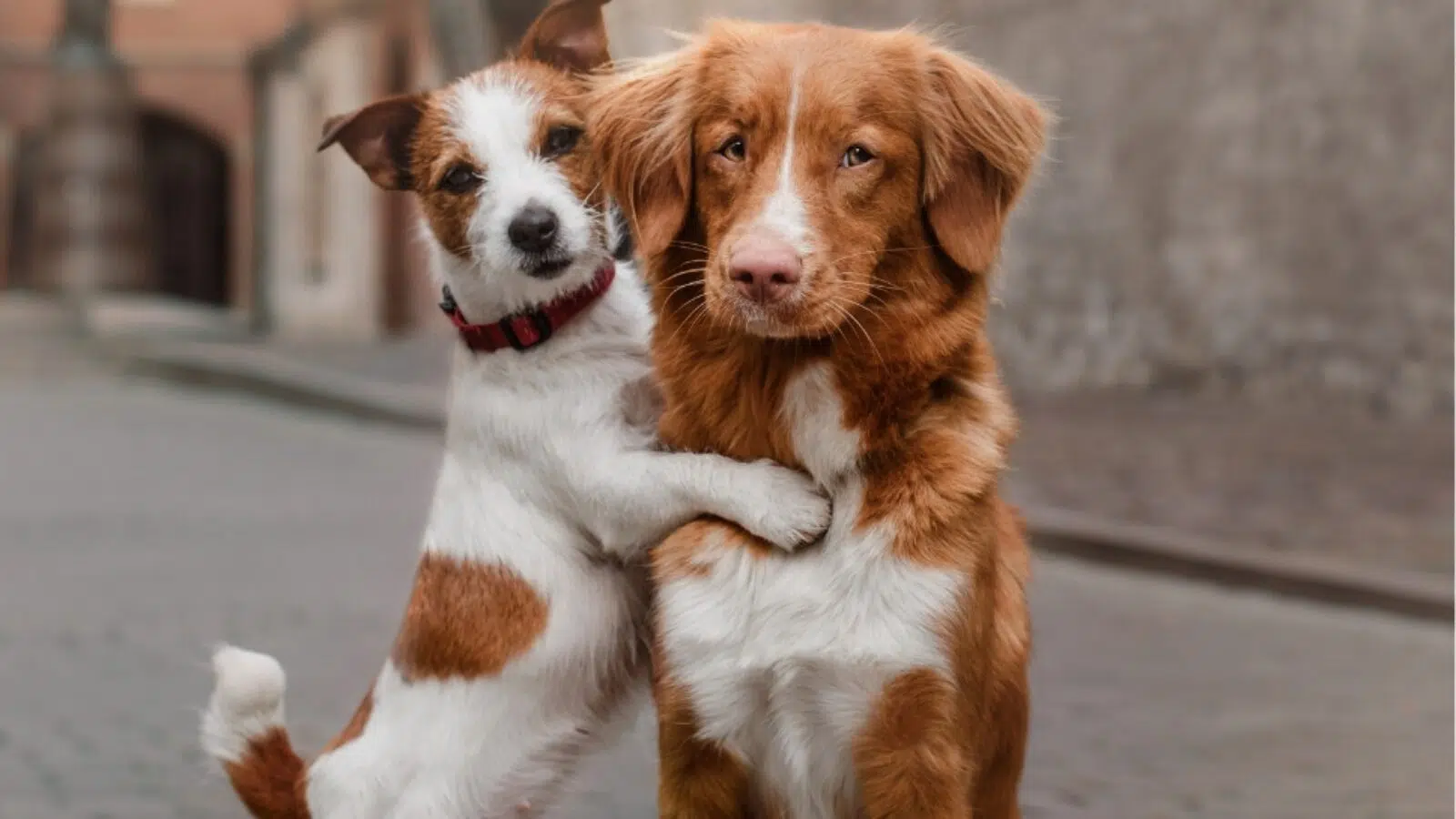
This may sound similar to being ‘clingy.’ In a way it is, but you may notice your dog display some ‘pushy’ behaviors too. They may want to get up close and personal with you, particularly if a perceived threat, such as another dog, is present.
By crowding you, they are limiting your ability to move freely. This will block the other dog from getting close to you, by pushing themselves into the center of the situation. This will make it pretty tricky to divert your attention anywhere else but on them!
Leaving The Space

In contrast to being ‘clingy’ or ‘pushy’, some dogs may choose to withdraw themselves from the situation completely. You may notice them looking anxious, or insecure. Their tail and ears may be flat, their head down and you may see the whites of their eyes.
As mentioned earlier, like humans, dogs have their own personalities. This could be their way of coping and dealing with their emotions.
Vocalising

A lot of the communication we receive from dogs is through their body language. There are times when they communicate verbally, too.
Growling or barking at you, or another dog, can be a sign they are feeling somewhat jealous of the dog in that situation. This will likely be driven by feeling the need to compete for your attention or a resource, as like the others.
Doing Tricks

Dogs are clever creatures and often have a bag full of tricks they’ve learned from your teaching. They know this impresses you, and they often get some sort of reward for doing it. So, what better way to capture your attention when they need it most?!
They may sit, offer you their paw or twirl around to distract you if you are showing affection or attention to another dog.
Jealousy can be problematic, or not cause for concern, depending on how your dog reacts and the severity of their actions. Some steps to consider to limit this behavior is to socialize them from a young age. Set boundaries.
Especially in multi-pet households, ensure they have their own safe spaces to rest and eat, so they aren’t competing with one another.
Safety of yourself, your dog, and any other dogs and humans is paramount. Often, a very jealous dog will not back down easily, so dissipating the situation entirely is for the best.
While we shouldn’t respond negatively to the behavior (i.e. shout at them), as this can cause other problems, we should avoid rewarding it too.
It is entirely possible to improve their behavior, if it persists and is a problem, working with qualified, recognized animal behaviorists to do so. Your vet can refer you for this.
Make us part of your pack when you search.
Add Caninely as a preferred source on Google and we'll be right there next time you go searching. Five seconds, and you get straight dog talk instead of the usual fluff.

9 Healthy Habits That Help Dogs Live Longer
Most dogs don't outlive their breed average because of luck or genetics. They outlive it because someone was paying attention. Here are nine small, boring, repeatable things you can do that actually move the needle on how long your dog sticks around.