4 min read
Bernese Mountain Dog: Breed Characteristics and Care
Calm, tri-colored, and devoted to a fault. Berners are easy to fall for and harder to lose. Here's a clear-eyed look at the breed's temperament, health, and what ownership really costs, including the parts most breed profiles gloss over.

Contents
The Bernese Mountain Dog is the breed people fall in love with at first sight and then have to make peace with the fine print. Tri-colored, teddy-bear soft, calm in the house, devoted to a fault and on a clock most owners aren’t ready for. The average Berner lives 7 to 10 years. That’s the trade you’re making, and it deserves to be said out loud before anyone falls in love.
What you’re getting in return is one of the gentlest giants in the working group. Berners were bred to haul carts and watch over Swiss farmsteads, and that quiet, steady-on-the-job temperament still runs through the breed.
They’re affectionate without being needy, alert without being yappy, and big enough to take up half the couch without apologizing for it. If you’ve got the space, the patience, and a realistic head about the health curve ahead, there are very few dogs more rewarding to live with.
Breed Overview
Breed Pros and Cons
Pros
- Calm and gentle indoors
- Exceptional with kids
- Striking tri-color coat
- Thrives in cold climates
- Deeply loyal to family
- Moderate exercise needs
Cons
- Short lifespan (7-10 years)
- High cancer rates
- Heavy shedder
- Struggles in heat
- Prone to hip & joint issues
- Can be stubborn
Physical Attributes & Appearance

Bernese Mountain Dogs are large, sturdy working dogs built for cold, mountainous terrain. Males typically stand 25 to 27.5 inches at the shoulder and weigh 80 to 115 pounds. Females run 23 to 26 inches and 70 to 95 pounds. They’re slightly longer than they are tall, with a broad chest, strong shoulders, and the kind of substantial bone structure you’d want in a dog originally bred to pull dairy carts up Alpine slopes.
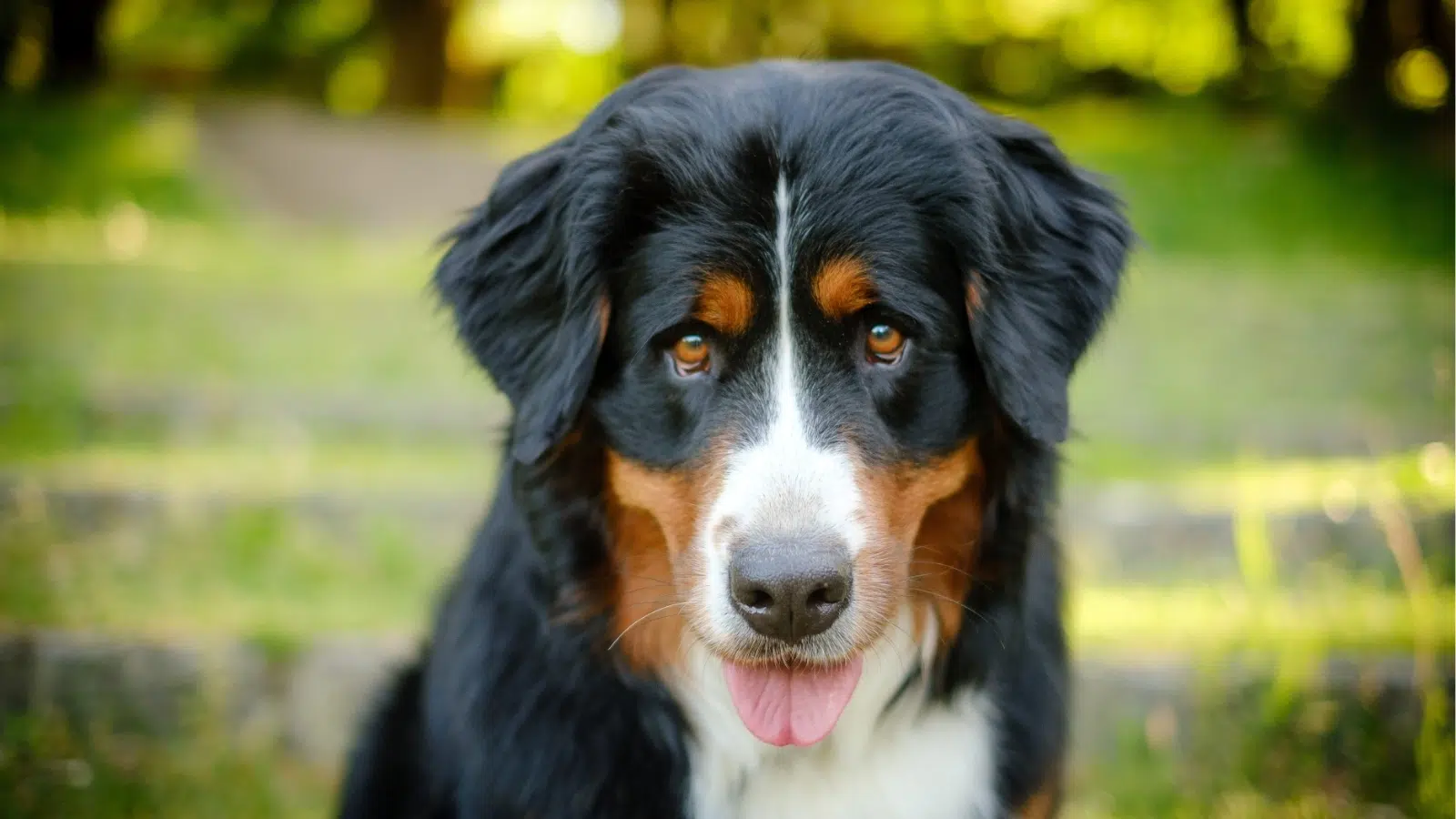
The coat is the calling card. Thick, moderately long, slightly wavy or straight, and always tri-colored: jet black base, rust markings on the cheeks, eyebrows, legs, and chest, and bright white on the muzzle, blaze, chest, and tail tip. The pattern is symmetrical and unmistakable. Underneath sits a dense undercoat that blows out twice a year and sheds at a low, steady level the rest of the time. Plan accordingly.
Behavioral Characteristics & Temperament

Berners are famously even-tempered. They’re affectionate with their family, polite with strangers after a moment of consideration, and tolerant of pretty much everything kids and other pets throw at them. They’re not aloof, but they’re not Golden Retrievers either. There’s a quiet dignity to them. They watch a room before they join it.
The flip side of that calm exterior is sensitivity. Berners do not respond well to harsh corrections, raised voices, or chaotic households. They want to please, but they want to please you specifically, and they need to feel secure to do their best work. Maja, my Saint Bernard, has a similar streak, as giant breeds often do. Yell at one of these dogs and you’ll undo a week of training in thirty seconds.
They’re also slow to mature. Most Berners stay puppy-brained until two or three years old, which can be a lot of dog to manage when they’re already pushing 90 pounds. Training has to start early and stay consistent. The good news is they’re smart and food-motivated. The honest news is they can also be stubborn, especially adolescent males who decide a “sit” is more of a suggestion.
Ideal Home Life

Berners want a job, but the job is mostly “be near you.” This is a velcro breed. They follow you to the bathroom, lie across your feet while you work, and sigh dramatically when you leave the room. If you’re gone eight to ten hours a day with no backup, this is not your dog.
Climate matters more than people admit. Berners were built for the Swiss Alps. Thick double coat, low heat tolerance, comfortable in snow up to their shoulders. If you live somewhere that hits 90°F regularly, you’ll need shade, AC, and the discipline to skip midday walks for half the year. Tennessee summers would not be kind to one. Trust me, a giant breed in real heat is a vet bill waiting to happen.
Exercise needs are moderate, not extreme. A solid 30 to 60 minutes a day of walking, hiking, or low-impact play is plenty for an adult. Puppies and adolescents need less high-impact exercise than people assume. Repetitive jumping and forced running on growing joints is how you fast-track hip and joint problems later in life. A house with a yard, cool floors, and a family that’s home a lot is the dream setup.
Health Risks
Cancer
Cancer is the leading cause of death in Berners, and the numbers are stark. Studies have found that around half of all Bernese Mountain Dogs die from some form of cancer, with histiocytic sarcoma being especially common in the breed. It’s the single biggest reason their average lifespan is shorter than nearly every comparably sized breed.
Hip and Elbow Dysplasia
Both conditions are common in the breed, with elbow dysplasia rates among the highest of any breed tracked by the OFA. Reputable breeders screen for both with hip and elbow X-rays. If a breeder can’t show you those results, walk away.
Bloat/Gastric Dilatation-Volvulus
Deep-chested giant breeds are at high risk for bloat, where the stomach fills with gas and can twist on itself. It’s a true emergency. Without surgery within hours, it’s fatal. Many giant-breed owners opt for a preventative gastropexy when their dog is spayed or neutered.
Degenerative Myelopathy
A progressive spinal cord disease that causes hind-end weakness and eventual paralysis. There’s a DNA test for the gene, and responsible breeders use it to avoid producing affected puppies. It typically shows up in older dogs and is heartbreaking to watch.
Von Willebrand’s Disease
An inherited bleeding disorder similar to hemophilia. Affected dogs may bruise easily, bleed from the gums, or have prolonged bleeding from minor injuries. There’s a DNA test, and any breeder worth their salt screens for it.
Portosystemic Shunt
A liver condition where blood bypasses the liver instead of being filtered through it. It usually shows up in puppies as poor growth, vomiting, or neurological symptoms. Surgery can correct it in many cases but it’s expensive and not always successful.
Hypothyroidism
The thyroid stops producing enough hormone, leading to weight gain, lethargy, hair loss, and skin issues. It’s manageable with daily medication once diagnosed but easy to mistake for general aging in a breed that already ages fast.
Heat Sensitivity
Not a disease, but worth flagging. The same coat that makes Berners thrive in winter makes them dangerously prone to heatstroke in summer. Heat sensitivity contributes to overall mortality in the breed and shapes daily life more than most owners expect.
Projected Cost of Ownership
Owning a Berner is expensive, and most of the expense isn’t the puppy price. It’s everything that comes after. Food bills scale with the dog. Vet bills scale with the breed’s risk profile. And because Berners often face serious health issues earlier than other breeds, the cost curve is front-loaded compared to a Lab or a mixed-breed of similar size.
The numbers below are realistic ranges for a healthy adult Bernese Mountain Dog over a typical year. Emergencies, surgeries, and chronic conditions can push annual costs significantly higher. The table reflects baseline care, not worst-case scenarios.
| Expense | Initial | Monthly | Annual |
|---|---|---|---|
| Purchase | $2,000-$3,500+ | — | — |
| Supplies | $300-$600 | — | — |
| Food | — | $80-$150 | $960-$1,800 |
| Veterinary | $500-$1,000 | — | $500-$1,000 |
| Training | $150-$500 | — | Varies |
| Grooming | $40-$80 | — | $70-$110/session |
| Insurance | — | $60-$120 | $720-$1,440 |
| Boarding | — | Varies | $40-$75/day |
| Replacements | — | — | $150-$300 |
| TOTALS | $2,500-$4,500 | $140-$270 | $2,400-$4,650+ |
Purchase prices vary widely based on breeder reputation, health clearances, and bloodline. Reputable Berner breeders are not cheap and shouldn’t be. The screening alone (OFA hips and elbows, cardiac, eye, DNA panel) costs them serious money before a puppy is ever born. A bargain Berner usually means skipped testing, and that’s the bill that comes due five years later.
Pet insurance is genuinely worth considering for this breed. Given the cancer rates and orthopedic risk, a single major claim can pay for years of premiums. Just enroll early. Most policies won’t cover anything diagnosed before the policy starts, and Berner health issues have a way of showing up sooner than you’d expect.
History and Breed Origins

The Bernese Mountain Dog comes from the canton of Bern in the Swiss Alps, where farmers used them for centuries as all-purpose working dogs. They drove cattle, pulled milk carts to market, and watched over the homestead. They’re one of four Swiss Sennenhund breeds, all sharing the tri-color coat. The Berner is the only one with the long, flowing fur.
By the late 1800s the breed had nearly died out, replaced on Swiss farms by mechanized equipment and crossbred to the point where pure Berners were hard to find. A Swiss innkeeper and dog enthusiast named Franz Schertenleib went hunting through remote Alpine villages in the early 1900s looking for the few remaining purebred specimens. With the help of geologist and dog expert Albert Heim, those dogs became the foundation of the modern breed.
The Berner was officially recognized in Switzerland in 1907 and arrived in the United States in 1926, when a Kansas farmer named Isaac Schiess imported a pair. The American Kennel Club recognized the breed in 1937. Today they sit around the 20th most popular breed in AKC registrations, a position that’s held remarkably steady for a dog with such a serious health profile. This tells you something about how hard people fall for them.
Frequently Asked Questions
How long do Bernese Mountain Dogs live?
The average lifespan is 7 to 10 years, which is short even by giant-breed standards. Cancer is the primary driver. Some Berners live longer with good genetics and careful management, but anyone considering the breed should plan emotionally and financially for a shorter run than they’d get with most other dogs.
Are Bernese Mountain Dogs good with kids?
Yes, and it’s one of their strongest traits. Berners are patient, gentle, and tolerant of the chaos kids bring. The only caveat is size. A 100-pound dog can knock a small child over without meaning to, so supervision around toddlers is non-negotiable.
Do Bernese Mountain Dogs shed a lot?
Yes. They shed steadily year-round and blow their coat heavily twice a year, in spring and fall. Brushing two or three times a week keeps it manageable; during a coat blow, daily brushing is the only way to stay ahead of the fur. Black and white tumbleweeds are a fact of life.
Can Bernese Mountain Dogs handle hot weather?
Not well. Their thick double coat is built for Alpine winters, not Southern summers. They overheat fast, so hot-climate owners need air conditioning, shade, early-morning or evening walks, and a real plan for keeping them cool from June through September.
Are Bernese Mountain Dogs easy to train?
Moderately. They’re smart and want to please, but they’re sensitive and slow to mature. Harsh corrections backfire badly. Positive reinforcement, consistency, and patience work. Especially during the long adolescent phase, which can stretch into year three.
Sources
Make us part of your pack when you search.
Add Caninely as a preferred source on Google and we'll be right there next time you go searching. Five seconds, and you get straight dog talk instead of the usual fluff.


Golden Retriever: Breed Characteristics, Care and Photos
Looking for the perfect dog to add to your family? The Golden Retriever is one of the most popular dog breeds in the entire United States, and for good reason. Keep reading to find out why.