7 min read
9 Surprising Reasons Your Dog Is Yawning at You
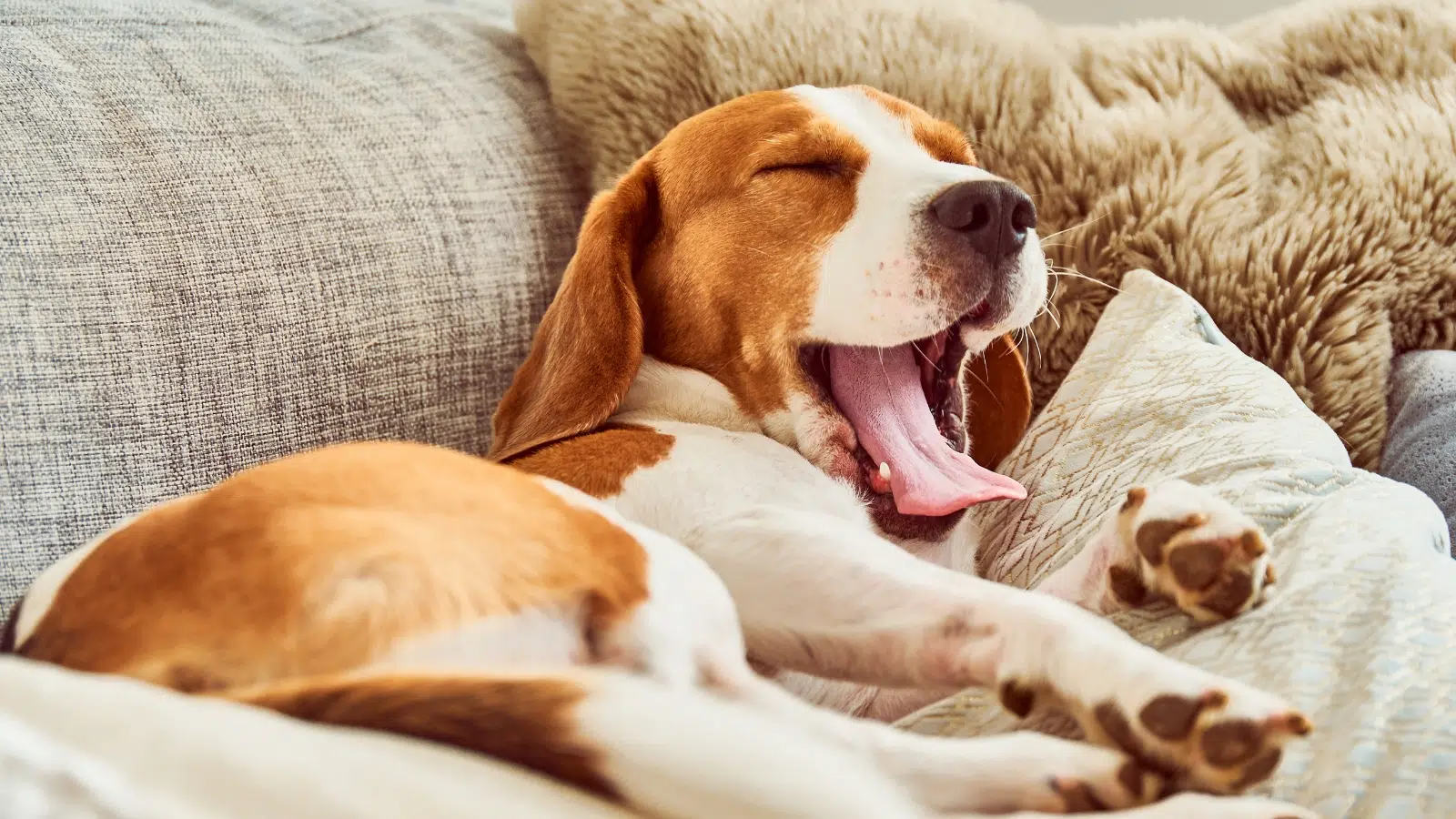
Is your dog yawning all the time? Logically, you may think it's just because they're tired. But actually, dogs yawn for a number a different reasons. Keep reading to find out why yawning happens, when you should be concerned, and what to do about it.

Contents
If your dog is yawning at you consistently, you’re probably not sure exactly what it means. You might see a mouth wide open, notice a deep breath, or hear a little squeak or sigh.
If your dog is yawning but doesn’t seem tired, it can happen during social interactions or other emotional moments, and that can be confusing depending on what’s going on with your pup.
Dog yawning doesn’t always mean the same thing. It depends on what’s happening around your dog and what they’re feeling in that moment. If you’re wondering why it happens, the first thing to look at is the situation.
Watch their body language and find out whether this is normal for them. If it’s not, then it’s time to start looking at the possible reasons.
Is Your Dog Getting Tired?

Like all creatures, dogs get tired. If it’s getting closer to nap time or bedtime, you might notice your dog yawning as they start to wind down and prepare to sleep.
There are other signs that suggest they’re ready to rest. Those signs can help you identify whether the yawning behavior is simply all about being tired.
If they stretch, settle into bed, circle around on their dog bed, or become less interested in things around them, that could mean they’re just tired and looking to get some sleep.
I know that one of my dogs comes in to lie next to the bed, does several circles, paws at it, starts to yawn, and then lies down. That provides the clues that tell me, for my pup, it’s just part of being tired and lying down.
Is Your Dog Waking Up?

Just like when they go to sleep, yawning can be part of your dog’s wake-up routine. It can accompany the transition out of sleep as well as the transition into it.
One of my own dogs does the typical big stretch and yawn at the same time when they wake up. Your dog might lift their head, stand, circle around, stretch, and start moving to get themselves going. The yawn can come as they’re getting ready to start their day, or even from a little bit of excitement.
Waking from sleep gives you an obvious time when your dog might yawn, and it’s quite common. If it happens outside of that, you may need to look for a different reason.
Could Your Dog Be Feeling Stressed?

Stress is one of the leading reasons a dog might start to yawn. A lot of people don’t realize that, but we have a dog of our own who starts to yawn very frequently when he gets stressed.
This could happen for a number of different reasons. It could be that you’re putting them in a situation where they’re uncomfortable. This could be a trip to the veterinarian, a visit to the groomer, or a session where you’re trying to teach them a new command.
When I’m trying to teach one of our mastiffs something he doesn’t understand, or something he doesn’t want to do, he will just sit there, look at me, and yawn because he isn’t sure how to respond.
Yawning can also happen around unfamiliar people and objects, or when the environment changes, because the dog is stressed and unsure how to react.
You do need to watch the rest of their body, because that will show you the context. If your dog is in a new situation and there’s some hesitation or avoidance, that might indicate they’re stressed and apprehensive.
If they’re turning away or looking to put space between themselves and what’s happening, they could be showing you they’re uncomfortable, especially if it’s accompanied by a yawn.
Sometimes giving them a little time or space away from the stressful event can help them adjust and help the yawning stop.
Is Your Dog Unsure of What’s Happening?

It’s quite possible that your dog is uncertain about what’s going on rather than scared or frightened. If they’re confused about a training request, or they’re in an unfamiliar situation around new dogs and new people, they may not know how to respond.
They may be uncertain, and that uncertainty can overlap with stress.
It could be new people, or even moving a large piece of furniture into their environment. Anything that changes their daily surroundings. Just watch and see. This may be how they’re dealing with it in the moment.
If they’re hesitant or avoidant around anything new in their life, that adds context to the yawning behavior that the yawn by itself can’t give you. So watch what they’re doing and whether something unfamiliar seems to be causing that uncertainty.
Could Your Dog Need a Break From Interactions?

Sometimes a dog is uncomfortable being hugged, petted, or handled more than normal. They might be a little tense and stressed as a result of the unwanted interaction.
You’ll often see this happen when children who aren’t used to handling dogs try to handle a dog as if it’s a toy. This can cause a dog to be unsure of how to respond, and they start to yawn.
If the dog stays close, it isn’t necessarily a signal that the situation is going poorly. It could just mean they’re not sure what to do. They may like the contact but not really know how to respond because it’s unfamiliar to them. So, they might yawn as a result.
Other signals that suggest pausing the interaction would help include pulling away, stiffening, avoiding eye contact, or licking their lips. Those can signal that the dog is uncomfortable and that whoever is initiating contact needs to take a step back.
As an owner, you should always be aware of what’s going on with your dog. Encourage visitors to respect their space when petting them. Especially if yawning is a sign that your dog is uncomfortable with the interaction.
Is Your Dog Anticipating Something Exciting?

Unlike people, dogs can’t really tell you that they’re excited about something. One of the ways a dog might show you it’s excited is by yawning.
You might notice it when you’re preparing their breakfast, grabbing their leash, or picking up their favorite toy. You might see them stretch, start jumping around, and yawn at the same time.
Anticipation is a possible explanation. You just have to watch the timing of what’s going on. They could be excited and anticipating what’s coming next.
If they’re uneasy, they may have different behaviors accompanying the yawn. Watching those behaviors alongside the timing can help you distinguish between the two.
If the yawning stops once the activity begins, that’s a helpful pattern suggesting it’s one of your dog’s behaviors when they’re excited about something.
Could Your Dog Be Bored or Frustrated?

Like humans, dogs can get bored. And that means they can get destructive and do things they shouldn’t be doing. Some dogs will paw at you. Others will start pacing, and/or yawn.
If yawning precedes destructive behavior, where they start destroying a bed, toy, or pillow, it could be part of their restlessness. They get bored, become frustrated, and start doing things they shouldn’t.
Maybe your dog hasn’t had any attention for a few hours and you notice them pacing, trying to get your attention, and starting to yawn. That could mean they’re bored and need to burn off some energy. A quick walk or a run around the yard may help if that’s the cause.
So think it through. If you notice it happens more when your dog is bored or frustrated, it could be their way of communicating that they need more activity.
Is Your Dog Responding to Another Yawn?

Just like with humans, yawning can be contagious. I wouldn’t describe this as something that’s automatic. The best thing to do is watch and see if your dog follows after another dog yawns.
In fact, right now I’m thinking about a dog yawning, and I’m wanting to yawn. Yawning can be contagious not just from animal to animal, but from one species to another.
That said, just because your dog is sharing a yawn with another dog doesn’t mean that’s the cause. It could be that your dog is tired, anxious, frustrated, or experiencing any of those other things.
A 2020 analysis of six studies supported contagious yawning in dogs. That doesn’t establish empathy, but it does support that dogs can yawn contagiously.
Could a Physical Problem be Involved?

If your dog doesn’t fall into these other categories, it’s possible something physical could be involved.
If you notice a change in your dog’s behavior or attention span, or they seem sleepier or more lethargic than normal, it may be time to visit your veterinarian. There could be something going on with their health.
Other symptoms might include excessive drooling, difficulty eating, or signs of discomfort. These are things to discuss with your veterinarian to determine whether the yawning is connected to something more serious than an isolated yawn.
How Should Owners Respond?

First, try letting your dog rest and see if they go back to normal, depending on what’s happening around them.
You may want to pause an interaction with other dogs if yours looks uncomfortable. Give your dog space to leave rather than keeping them locked into an unwanted interaction. If it’s during training, just shorten the session, or pause training altogether.
Focus on the situation around your dog rather than just stopping the yawning. You don’t need to suppress a yawn, which is a natural behavior. You need to identify what’s causing it.
Oftentimes, as owners, we tend to overreact. Sometimes it’s simply good to let your dog have a little space and see how they react.
When to Contact Your Vet

Consider contacting your veterinarian if your dog is yawning more than normal and it’s accompanied by other troubling behaviors that weren’t there before. Examples include your dog not eating, acting tired, or showing signs of discomfort. Make sure to mention those symptoms when you speak to your vet.
If your dog is struggling to move their jaw or can’t close their mouth normally, it could be an oral problem that your veterinarian needs to examine. Don’t treat it as ordinary yawning, and don’t force the jaw.
Sometimes your vet may ask for a short video, which can be more helpful than describing the behavior from memory. Take one if you can and bring it with you.
When you visit your veterinarian, make sure you share when the behavior started, how frequently it happens, what may have triggered it, and any accompanying symptoms.
Make us part of your pack when you search.
Add Caninely as a preferred source on Google and we'll be right there next time you go searching. Five seconds, and you get straight dog talk instead of the usual fluff.


11 Adolescent Dog Behaviors That Might Surprise You
Adolescence can change a dog's behavior in unexpected ways, even if they were once easygoing. From selective hearing to sudden bouts of independence, these behaviors are a normal part of when a dog grows up. Knowing what to expect can help keep you one step ahead during this challenging season of your dog's life.