4 min read
7 Signs of Hip Issues Most Dog Owners Blame on Age
Most owners see the signs of hip trouble years before they act on them. They just call it "slowing down." Here are 7 clear symptoms of hip issues in dogs, what they really mean, and why catching them early changes everything.
Vet Approved

This information is current and up-to-date in accordance with the latest veterinarian research. Learn more
Contents
The hips are the powerhouse of the body. They handle stability, balance, and movement, so when something’s off, the whole dog feels it. The hip is a ball and socket joint, and trouble shows up in two main ways: an abnormal connection between the bones, like hip dysplasia, or wear-and-tear arthritis from years of friction.
Both end the same way. Pain and inflammation. The catch is that dogs rarely vocalize with low-grade or chronic pain. They just keep moving and hope you notice. The good news is they leave clues. Subtle changes in how they walk, stand, or hold themselves are the body’s way of waving the flag. Catch them early and you have options. Wait too long and you’re managing pain instead of preventing it.
For dogs already showing signs, a daily hip and joint supplement is one of the simplest interventions and one of the few that works whether you start early or you’re playing catch-up. Below are the most common signs owners write off as aging, when they’re actually something else.
Limping

When a dog is pain free they move freely, carrying the weight of their body between each of their limbs. When a dog feels pain in one area, they compensate by shifting the load to other parts of the body. For example, when a hindlimb hurts they will put pressure on that leg for the minimum amount of time needed to be functional. They then use their other legs to compensate.
This shows up in their movement as limping, or a hobbling type movement. Limping is a sure sign that the body is feeling pain. It should not be ignored or shrugged off as not a symptom of discomfort.
When dogs have hip pain they can feel pain in both hindlimbs. They then carry more weight in the front of the body, resulting in a ‘bunny hop’ type movement. This is where the hindlimbs touch the ground for a shorter time, creating a hopping appearance when walking or running.
Sitting Postures

When a dog is uncomfortable in their hips they alter the way that they sit and rest to relieve pressure on sore joints. A dog will normally sit with their legs tucked under the body in a squatting type position. With sore hips, a dog will move both the legs to one side or splay both legs out behind them when lying down. This way, they have less pressure being carried through the hips.
Particularly in younger dogs, this abnormal sitting posture may be the only sign that tells you your dog has hip problems. A vet can take x-rays to identify and treat the underlying cause, such as hip dysplasia.
Not Wanting to Jump

The action of jumping puts huge pressure on the hips to launch the body into the air. So it’s understandable if the hip joints are painful, your dog will do anything to avoid jumping. Your dog may not want to jump to catch a ball or stick, waiting for it to drop to the ground instead. Or, they may refuse to jump into the car or onto the bed at night.
Dogs, especially younger dogs, should be very active and mobile. So, a refusal to jump is a red flag for pain in our eyes.
Stiffness
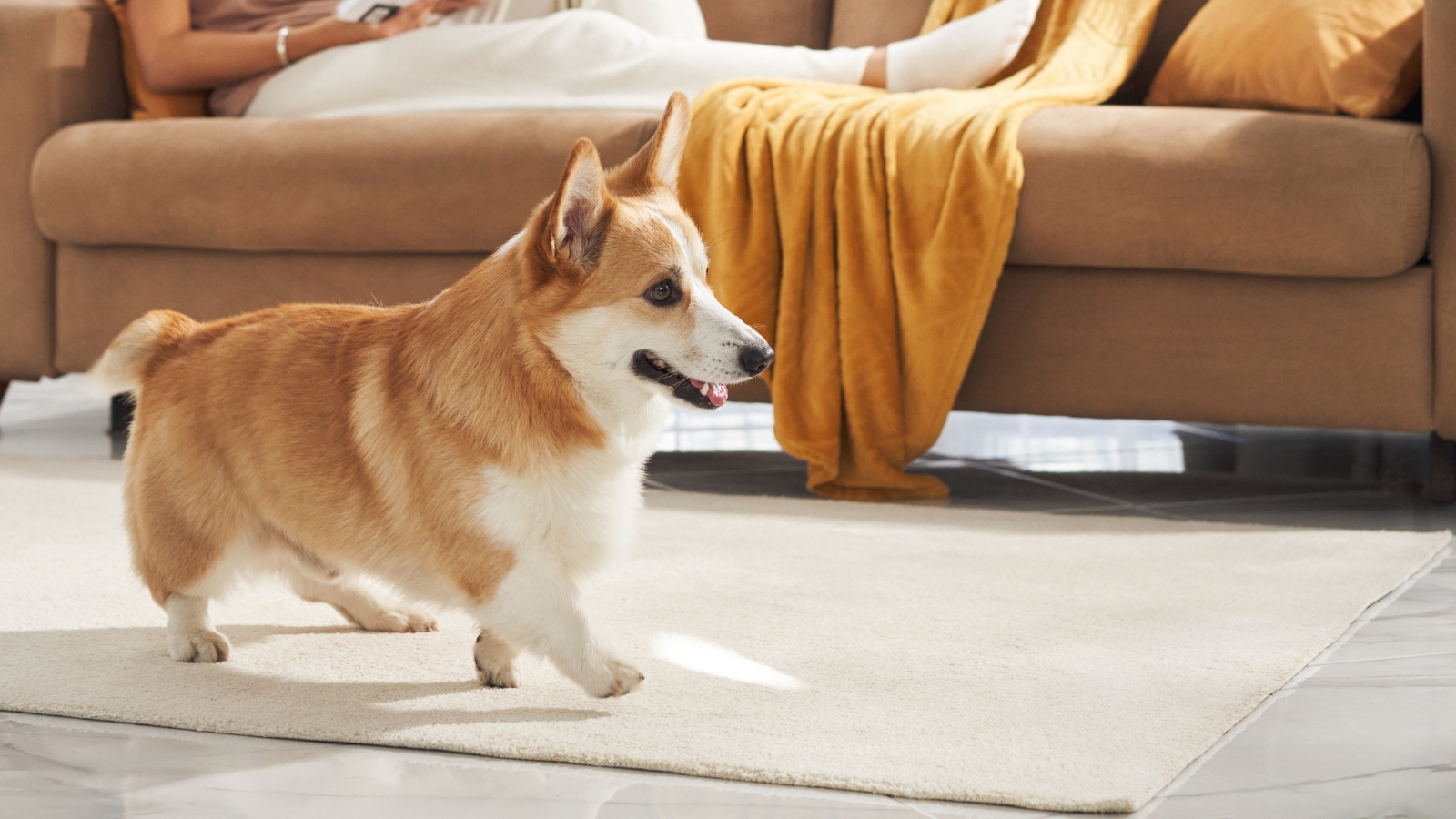
A healthy body moves freely, but in a painful body, stiffness is noted. A change in gait or movement, or slow cautious steps are a clue that your dog is feeling pain but not able to communicate it. Stiffness is worse after sleeping or first thing in the morning. It tends to get better through the day as the body loosens up with gentle exercise.
Changes in Sleep

A dog who has painful hips cannot settle well for sleep, and so often suffers with disrupted sleep. When dogs are asleep, they naturally change positions, and the pain of movement can wake them up. This reduces the REM sleep they get, essential for that rested feeling.
As a result, your dog can feel grumpy or miserable and this can show in their general demeanour. Your dog may try to hide away during the day to get extra rest, avoid going out into the garden or coming with you to answer the door.
Lack of adequate sleep and painful hips can affect your dog’s mood too. They may become grumpy, often put down to ‘being old’ but is actually a sign of pain. If your dog growls, barks or snaps when you try to touch their hips, this means they are painful and need vet help.
Body Appearance

A dog who has hip mobility issues will have an altered body shape to what their body should look like. Their back end over the hip area will look thinner or weaker compared to the front end. This is because your dog is using their back end less than they should, and is not developing the normal muscle mass.
Bones may be easier to feel or see. Your dog may stand with their legs closer together as they do not have enough muscle to support their legs comfortably.
Reluctance to Exercise

A dog dealing with hip mobility problems will exercise less, as exercise often leads to pain. Walking up and down hills, running or playing can cause increased pain or discomfort compared to walking on a flat surface or swimming.
This is because moving on an incline such as walking up a steep hill puts extra pressure on the hips. Your dog may refuse to fetch a frisbee thrown down a big hill. They may sit down when walking up lots of steps and refuse to move further up or down.
However big or small your dog is, they should love to exercise either by themselves, or with you, so refusal or reluctance to participate in exercise is a sign that something is bothering them.
Physiotherapy or hydrotherapy with a qualified practitioner is beneficial in helping your dog cope with exercise, so talk to a vet to learn more about your dog’s treatment options if they have hip mobility issues.
Make us part of your pack when you search.
Add Caninely as a preferred source on Google and we'll be right there next time you go searching. Five seconds, and you get straight dog talk instead of the usual fluff.


9 Subtle Signs Your Dog Needs Joint Support
Dogs can’t tell us when their joints ache, but they show us in small ways. In this article, Veterinarian Dr. Corinne Wigfall explains nine subtle signs your dog may need a little joint support to stay happy and active.